Short answer
In Dubai, mould usually comes from a leak, failed waterproofing in a bathroom or on a balcony or roof, or condensation where cold air-conditioned surfaces meet humid air. A lasting fix finds and stops the source, dries the wall completely, removes the mould and only then refinishes. Painting over damp walls brings the mould back within months.
- Find the source first: a leak, failed waterproofing or condensation from AC.
- Walls must dry out fully before any new plaster or paint.
- Bathrooms, balconies and roofs need a waterproofing layer under the tiles.
- Ask building management early if the source is in a neighbour's unit or a shared pipe.
Why mould appears in Dubai homes
- Leaks from pipes, AC drain lines or a neighbour's bathroom above.
- Failed or missing waterproofing under bathroom, balcony and roof tiles.
- Condensation: chilled walls, ducts and ceilings meet warm, humid air, especially in summer and in coastal communities.
- Poor ventilation in bathrooms, wardrobes and closed rooms while the owners are away.
Signs to look for
- Dark spots in corners, around AC grilles and on bathroom ceilings.
- Paint bubbling or wallpaper lifting.
- A musty smell in wardrobes and closed rooms.
- Stains or cracks on a ceiling below a bathroom or balcony.
How we fix it properly
Find the source
We check pipework, AC drains, waterproofing and ventilation, and involve building management if the cause is outside the unit.
Strip and dry
We remove wallpaper and damaged finishes and dry the walls completely before anything new goes on.
Treat the mould
The affected surfaces are cleaned of mould and treated.
Repair the cause
We reroute pipes, renew waterproofing or replace a damaged ceiling where needed.
Refinish
Walls are skimmed, with reinforcing mesh where they have cracked, then painted.
Cases from our work
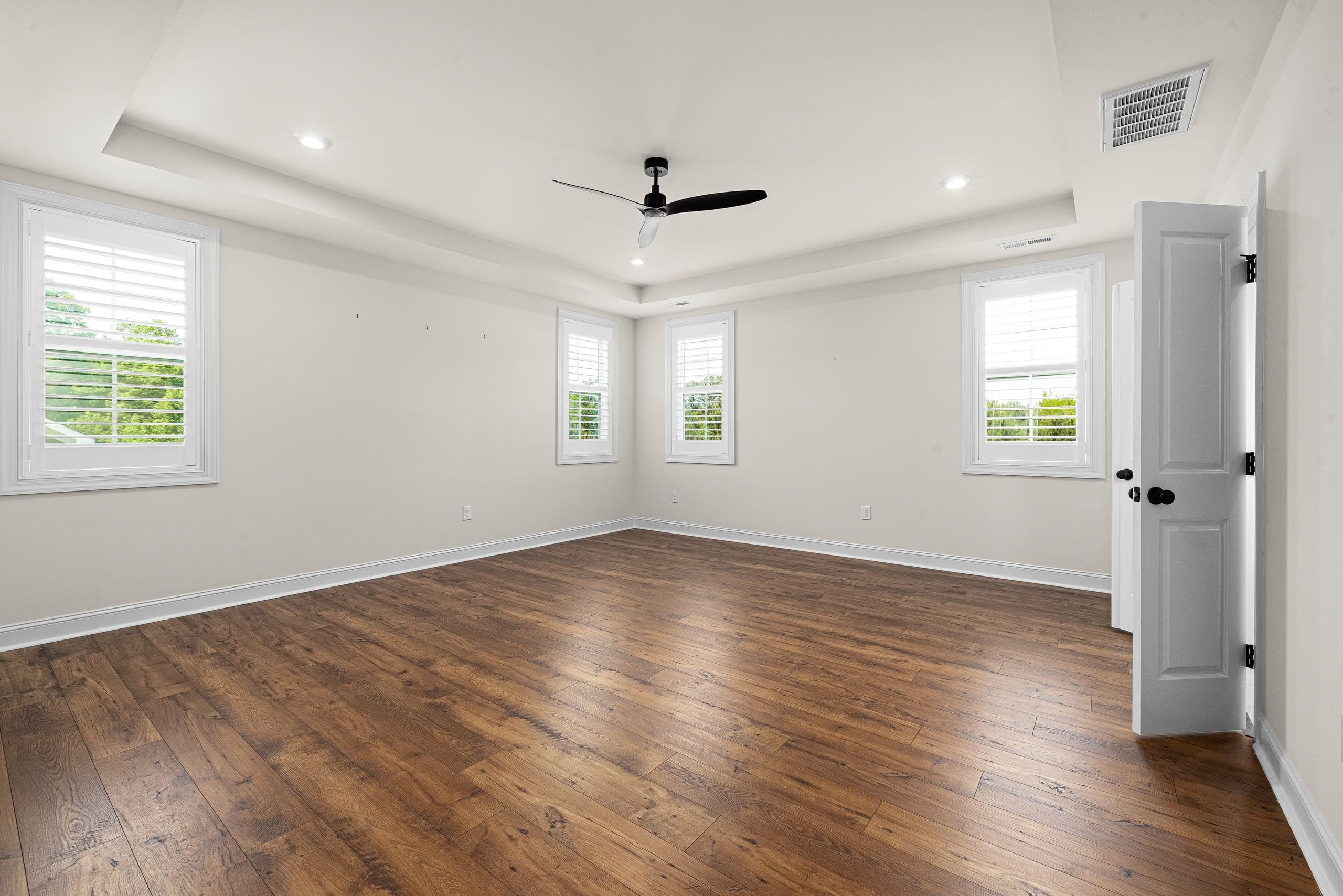
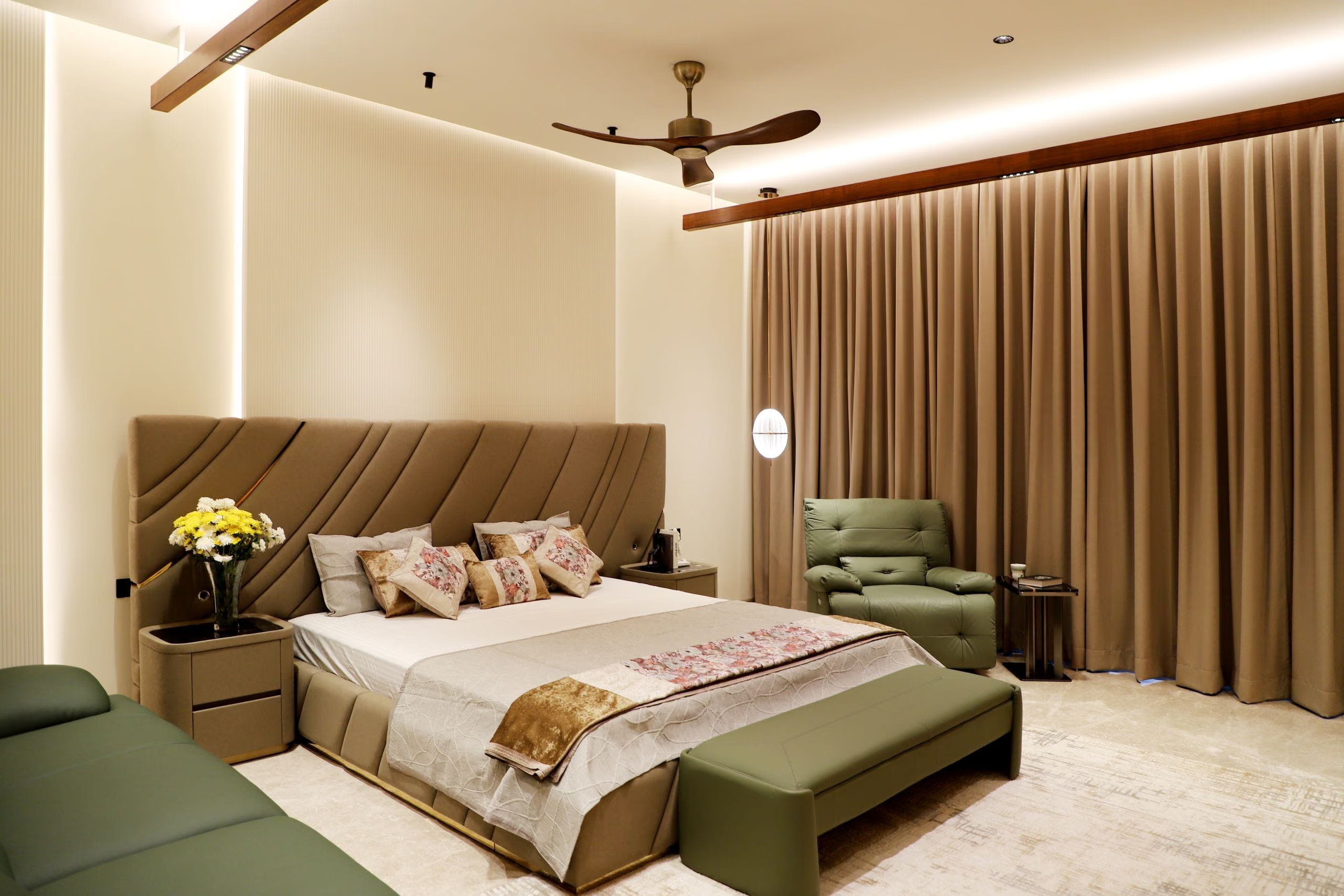
- Palm Jumeirah villa: walls fully dried, cleaned of mould and repainted, fixing the cause rather than covering the symptoms.
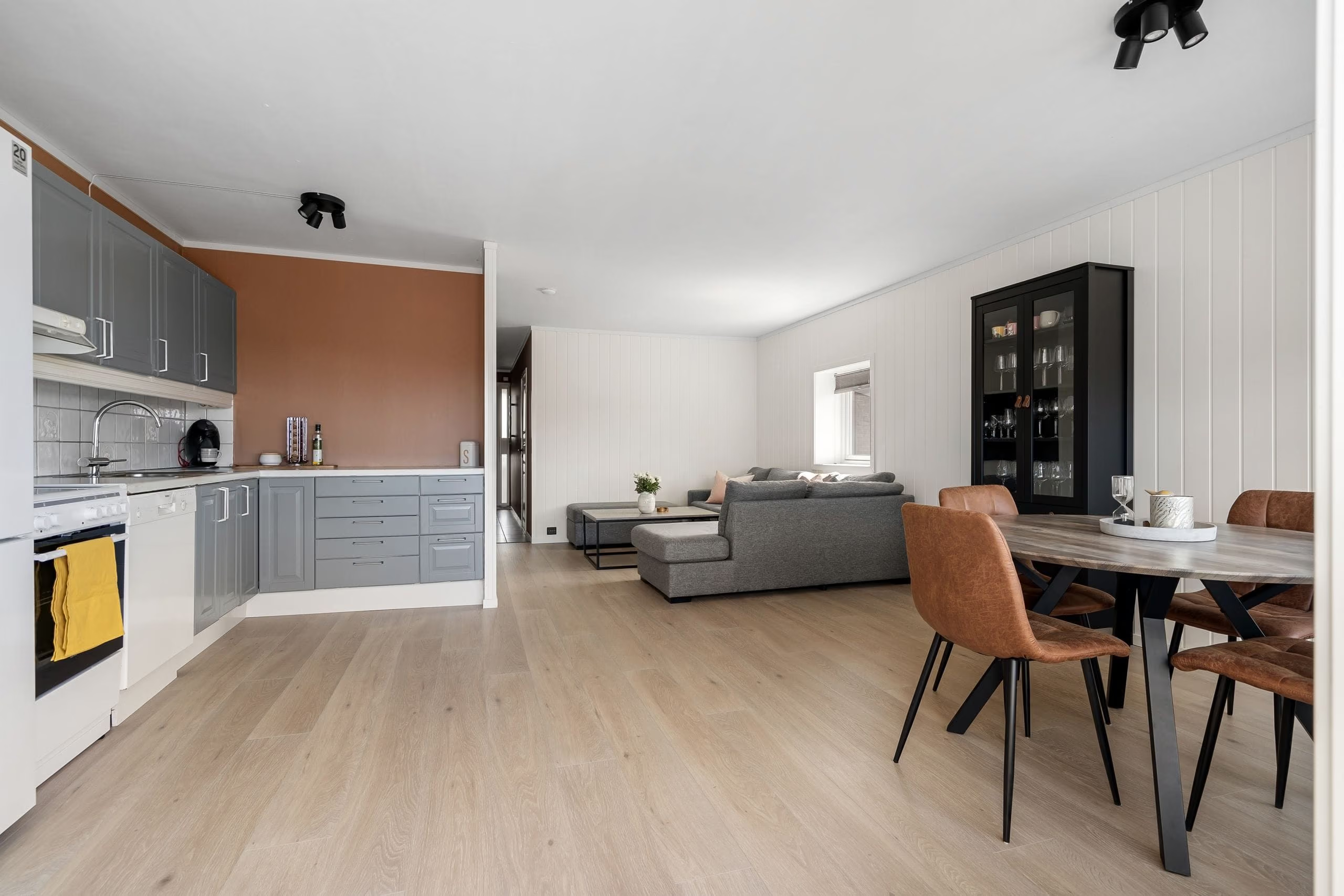
- Port de La Mer apartment: wallpaper stripped, walls cleaned and dried, bathroom ceiling replaced, and pipework rerouted for a new kitchen island in the same project.
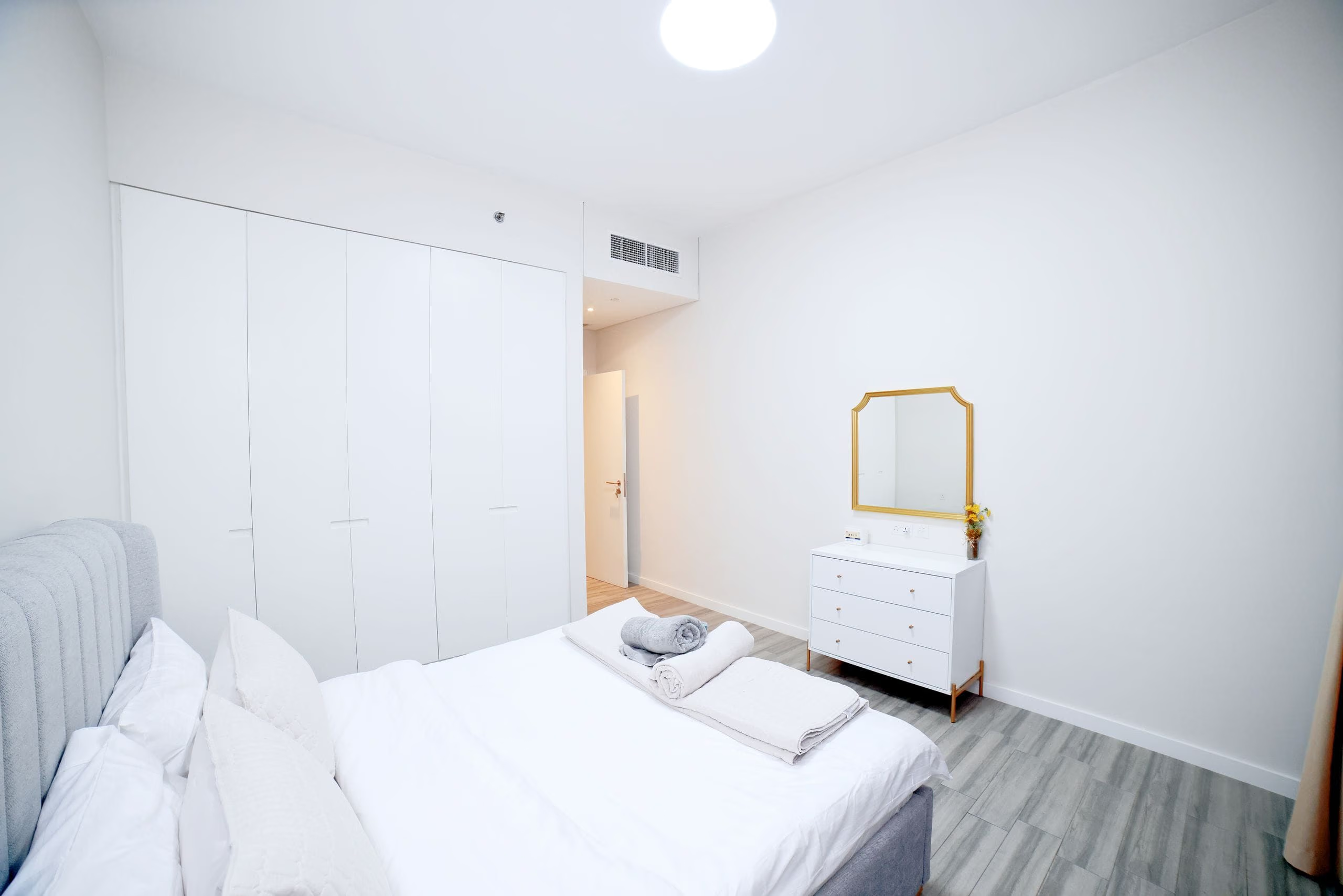
- Business Bay, two-bedroom apartment: mould removed from walls and ceilings, followed by repainting.
- Azizi Riviera: mould treated, walls skimmed with reinforcing mesh, ceiling cracks filled and the home refinished with new mouldings and flooring.
How to prevent it coming back
- Keep the AC running at a moderate temperature when you are away rather than switching it off.
- Use bathroom extract fans and leave wardrobe doors ajar.
- Have balcony and roof waterproofing checked every few years.
- Report ceiling stains to building management at once.
Questions and answers
Why is there mould in my Dubai apartment?
Most often because of a leak, failed bathroom or balcony waterproofing, or condensation where air-conditioned surfaces meet humid air. The source has to be found before the wall is repaired.
Can I just paint over mould?
No. Paint hides it for a while, but if the wall is still damp the mould returns. The wall has to be dried and treated first.
Who pays for mould repairs in a rented apartment?
It depends on the cause and the tenancy contract. Leaks and building defects are usually the landlord's or building's responsibility; discuss it with them before the works start.
How long does mould treatment take?
Surface treatment and repainting of an apartment can take about one to two weeks. If walls need to dry out or waterproofing has to be redone, allow longer.